The Bureau of Meteorology's October update reported a strong El Niño, expected to continue into summer. In eastern Australia, El Niño usually raises the chance of hotter days and below-average rainfall. It does not guarantee a dry summer. Storms, humid spells and wet weeks can still happen.
For exterior painting, that usually means fewer days lost to rain but more days when walls are too hot to paint in the middle of the day. Here is what changes and how to plan for it.
Fewer rain delays, more heat delays
Rain is the usual reason exterior work stops, and a drier summer can mean fewer of those delays. Heat causes its own problems:
- Paint dries too fast: On a hot wall, paint can dry before it levels out, leaving brush marks, roller marks and lap lines where one section meets the next.
- Hot surfaces: A wall in full sun can be much hotter than the air. Paint applied to a very hot surface may not form a proper film or bond well.
- Blistering: Fresh paint in direct sun on a hot day can blister, particularly on dark colours and timber.
The paint manufacturer's instructions set the limits. Dulux's Weathershield instructions, for example, say to paint the shady side of the house during the hottest part of the day, and not to paint on very humid days or when rain is forecast.
How painters work around the heat
- Following the shade: west-facing walls in the morning, east-facing walls in the afternoon.
- Starting early and stopping during the hottest hours on very hot days.
- Rescheduling on heatwave and high-wind days.
- Painting in smaller sections so each one is finished before the edge dries.
- Checking the temperature of the surface, not just the air.
The end of the day has its own limit. Paint needs to dry before evening dew, because rain or dew on drying paint can damage the coating.
This means a job can take more calendar days than a dry forecast suggests. Your painter should explain how heat days are handled when the work is scheduled.
Dark colours get hotter
Dark colours absorb more of the sun's heat than light colours. Charcoal, black and deep green are popular on Sydney facades and trims, and on a hot day they get much hotter than a light colour on the same wall.
That extra heat can make timber move more, cause doors and window sashes to stick, and wear the finish faster on exposed walls. Some timber and cladding manufacturers limit how dark their products can be painted.
If you want a dark scheme:
- Ask whether the paint range has a heat-reflective version of the colour.
- Keep the darkest colours to trims, or to walls that are out of the afternoon western sun.
- Check the cladding or timber supplier's colour requirements before choosing.
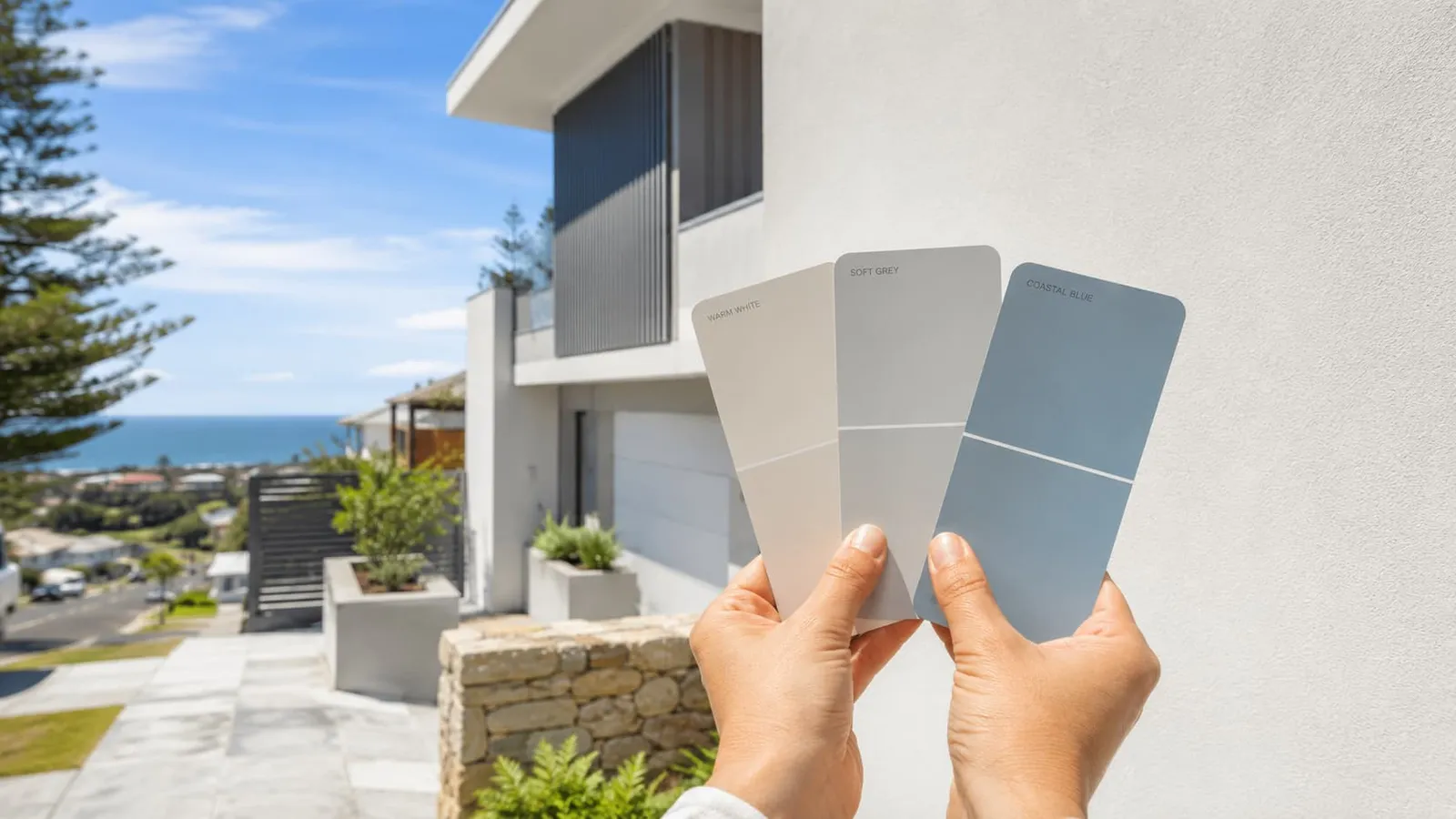
The light reflectance value (LRV) on a colour chip is a rough guide: the lower the number, the more heat the colour absorbs. Our guide to choosing exterior colours covers the rest of the decision. Heat matters on roofs too, where a heat-reflective coating is worth asking about when you book roof painting.
Smoke, dust and wind
El Niño summers in NSW often bring higher fire danger. Smoke, ash and wind-blown dust can settle on wet paint, and strong wind makes spraying and cutting in harder. Painters may stop work on smoky or very windy days and come back to those areas later.
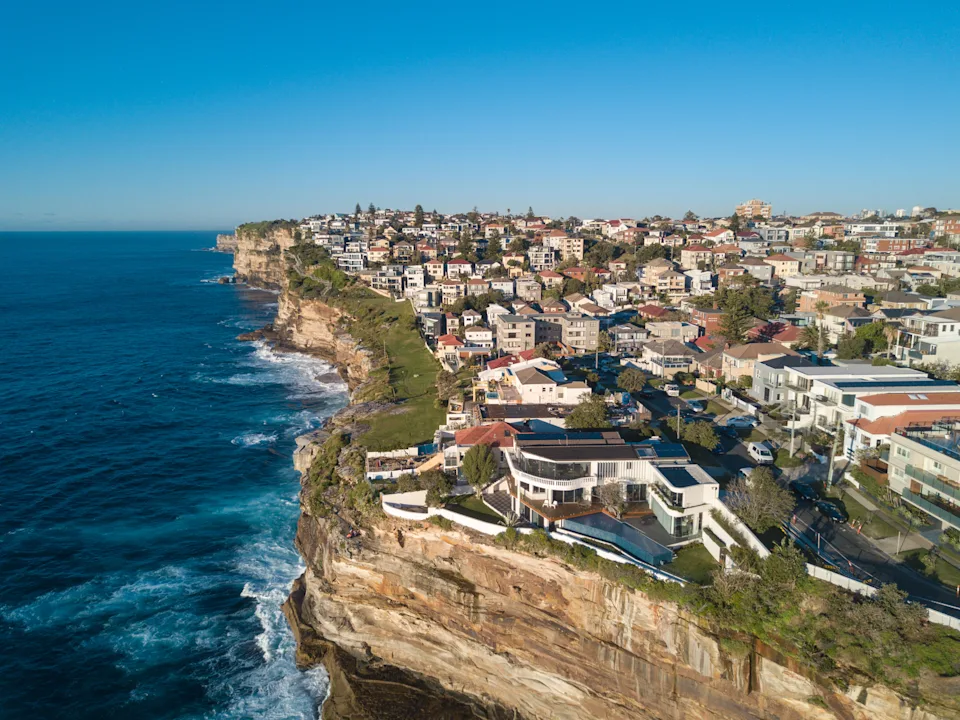
Surfaces still need washing before painting, even in dry weather. Dust, salt and chalky residue stop new paint bonding properly, especially on coastal homes in suburbs like Bondi, Coogee and Maroubra.
Paint this summer or wait?
Summer is still a workable time to paint in Sydney if the schedule allows for heat.
- Peeling paint or bare timber: Get it done before summer. Bare and failing surfaces break down faster in heat and sun.
- Large or two-storey homes: Start in late spring if you can, before the hottest weeks of January and February.
- No urgent problems: Autumn usually has milder temperatures and is a good alternative.
Our post on painting in October covers spring timing in more detail.
What to ask before booking
- How heat, wind and rain days are handled, and how you will be told about delays.
- Which walls will be painted at which time of day.
- Which primers and paints will be used, and whether they suit the surface and colour.
- Any colour limits for timber or cladding if you are choosing a dark scheme.
See how painting quotes work for more on what a quote should include.
Get a quote
See our exterior painting service or call 0413 655 514 to arrange a quote for your Sydney home.