
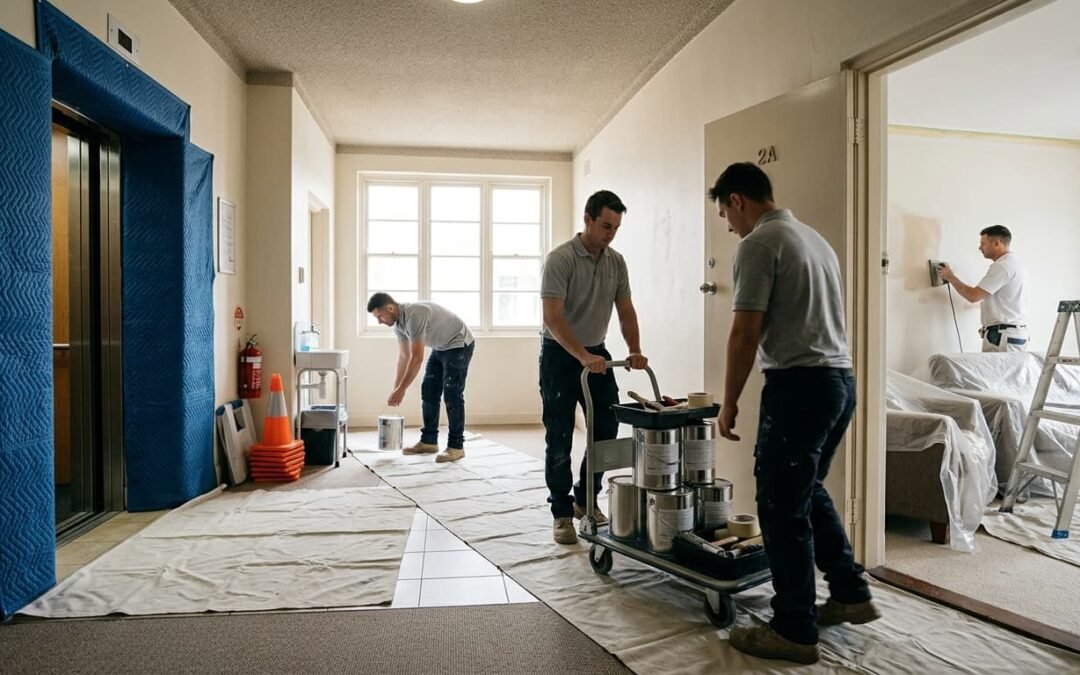
When we quote an apartment repaint, the number of bedrooms is only one part of the job. We also need to know how the paint and equipment will reach the apartment, whether the lift must be booked, where we can unload and whether the client will be living there while we work.
Those details can affect the job just as much as the wall area. A two-bedroom apartment with clear access and sound walls can be straightforward. The same floor plan in an occupied building, with restricted work hours and years of poor patching, needs a different plan.
After more than 11 years painting homes across Sydney’s Eastern Suburbs, we have found that apartment projects run best when access, surface condition and room sequencing are settled before the first drop sheet goes down. Mosi prepares each BrushUp Painting quote personally and stays involved throughout the work.
The questions we ask before booking an apartment job
A detached house usually gives us direct access and more room for equipment. In an apartment building, we need to plan the route from the vehicle to the walls being painted.
Before confirming the start date, we ask:
- Does strata or building management need to approve the work?
- What are the permitted work hours?
- Does the lift need to be booked or padded?
- Where can the team unload and park?
- How must shared corridors and floors be protected?
- Are there noise restrictions for sanding?
- Will the apartment be occupied?
- Where can paint and equipment be stored safely?
These are simple questions, but they prevent avoidable delays. The problems usually start when access is assumed rather than confirmed.
Check the strata rules before booking the job
Interior painting inside a privately owned apartment may not require formal strata approval, but building rules still vary. Approval is more likely to be needed when work affects common property, building access or an exterior element.
Before accepting a start date, ask the strata manager or building manager:
- Are painters required to provide insurance or licence details?
- Does the lift need to be booked?
- Are there approved work hours?
- Where can the painting team park and unload?
- Do common floors, walls or lifts need specified protection?
- Is notice required for neighbouring residents?
- Are there restrictions on painting balcony walls, doors or other exterior-facing surfaces?
Get the requirements in writing where possible. A clear list is easier to plan around than a last-minute instruction from building management. BrushUp Painting holds NSW painting licence 454091C and is insured for $10 million, so these details can be supplied when a building manager requests them.
Define what belongs to the apartment and what is common property
The line between private and common property can be unclear. Internal walls and ceilings are generally part of the apartment, but entry doors, balcony surfaces, window frames and external walls may be controlled by the strata scheme.
Do not assume that a surface can be repainted simply because it is accessible from inside the apartment. If a colour or coating change will be visible from outside, confirm the rules first.
This is particularly important in buildings with a consistent corridor or exterior colour scheme. Painting the inside face of an entry door may be acceptable while changing the corridor-facing side may not be.
Plan access before the painters arrive
In many Sydney apartment buildings, access affects the schedule as much as the number of rooms.
Lift bookings
Some buildings provide a dedicated service lift or require protective padding to be installed. Lift bookings may be limited to set windows, so painters need enough time to bring in drop sheets, ladders, tools and paint without blocking residents.
Loading and parking
A short loading zone can work for unloading, but it may not provide parking for the day. Confirm nearby parking restrictions, visitor spaces and access heights for basement entries. This is especially useful in busy Eastern Suburbs locations where street parking is limited.
Common-area protection
The route from the vehicle to the apartment matters. Lift floors, corridor carpets and shared walls should be protected where equipment is being moved. This is separate from protecting the floors and furniture inside the apartment.
Keys and security
Decide who will provide access each morning and how the apartment will be secured at the end of the day. If building fobs or lift keys are required, arrange them before work begins.
Decide whether the apartment will be occupied or empty
An empty apartment is usually simpler to paint because furniture, belongings and daily routines are not competing for space. It also gives the team access to several rooms at once.
An occupied apartment can still be painted successfully, but the sequence matters. Working one zone at a time allows residents to retain access to a bedroom, bathroom and basic living area.
Before the job starts, discuss:
- which rooms must remain usable
- work-from-home requirements
- children or pets in the apartment
- whether kitchen or bathroom access can be interrupted
- where furniture and covered belongings can be placed
- ventilation and drying time
A practical sequence is more valuable than an optimistic promise that the work will not affect the household at all.
How we plan an apartment repaint
The painting itself is only one part of the job. We plan the work so the apartment, shared areas and the finished surfaces stay protected from start to finish.
A typical sequence is:
- Protect the route in: Cover the agreed lift, corridor and apartment flooring before equipment is moved.
- Check the walls in real light: Look for cracks, dents, stains, loose paint and old repairs, including areas revealed by daylight from windows and balcony doors.
- Prepare the surface: Clean where required, fill defects, feather repairs, sand glossy areas and remove anything that is not firmly bonded.
- Prime for the actual problem: Treat patches, bare material, stains or difficult coatings with the appropriate primer rather than one product everywhere.
- Work through the rooms in sequence: Complete ceilings, walls, trims and doors while keeping agreed areas usable where possible.
- Inspect and clean: Check coverage and edges, remove protection and leave the apartment tidy.
We prefer the preparation to be written into the quote. “Prepare and paint” does not tell the client how peeling areas, stains or previous patching will be handled.
For a closer look at the full process, read our interior house painting guide.
One detail that often reveals a rushed job
After a hole or crack is filled, the repair must be sanded beyond the edge of the filler so it blends into the surrounding wall. Painters call this feathering the edge.
If only the centre of the patch is sanded, a raised outline can remain visible after the topcoat dries—especially when daylight runs across the wall from a window or balcony door. More paint will not hide a poorly blended patch. The surface needs to be corrected before the finish coats go on.
This is why apartment walls should be checked in side light, not only under the ceiling lights.
Why we do not promise a timeline from the bedroom count
Clients often ask how many days a two-bedroom or three-bedroom apartment will take. We can only give a reliable answer after considering the walls, access and whether the apartment is occupied. Two identical floor plans can involve very different amounts of work.
Timing depends on:
- whether the apartment is occupied
- wall and ceiling condition
- how many colours are being used
- the number of doors, frames and detailed trims
- ceiling height
- lift and work-hour restrictions
- whether dark colours need to be covered
- drying time between coats
- repairs or moisture problems discovered during inspection
An empty apartment with sound walls and one straightforward colour scheme will generally move faster than an occupied apartment with heavy repairs and detailed timberwork.
BrushUp’s guide to interior painting in Sydney provides broader planning ranges, but the start and completion dates for your apartment should be confirmed from the inspected scope.
What usually changes the price
We quote apartment painting as a complete scope because floor area alone does not show the real labour involved.
Rough starting-price guides
A single room starts from $1,800, while a three-bedroom interior starts from $5,000. These are starting guides only, not quotes. The final fixed price depends on the inspected surfaces, areas included, preparation, access and whether the apartment is occupied.
The biggest differences usually come from the following.
Surface condition
Cracks, dents, old repairs, stains and peeling paint increase preparation time. Fresh plaster and glossy existing coatings may require specific primers.
Scope
Painting walls only costs less than including ceilings, skirtings, doors, frames, wardrobes and other timberwork. Confirm exactly what is included.
Colour changes
Covering a dark wall with a light colour—or moving between strong colours—may require an additional coat or a tinted undercoat.
Access
Restricted work hours, difficult parking and limited lift bookings can affect how efficiently the team can move materials and complete the work.
Occupancy
Moving and protecting furniture room by room takes more time than working in an empty apartment.
Detail
Decorative cornices, panelled doors, heritage trims and built-in joinery require more cutting-in and preparation than plain walls.
For a useful comparison, see our broader guide to house painting costs in Sydney. It explains why two similarly sized properties can receive different quotes.
What we believe the quote should make clear
A client should not have to guess what “full repaint” means. A useful apartment painting quote should make the following points easy to compare:
- rooms and surfaces included
- areas specifically excluded
- preparation and repair allowances
- primer requirements
- paint products and finish levels
- number of coats
- responsibility for moving furniture
- common-area protection
- start date and expected duration
- clean-up and disposal
- how scope changes will be approved and priced
If a hidden problem is found after work begins, it should be shown and discussed before extra work proceeds. The written scope remains the reference point for what was originally included.
Our guide to comparing painting quotes explains what to check when prices look similar but the included work is not.
Choosing paint for apartment interiors
Apartments often have strong daylight near windows and lower light through internal halls. Colour and finish should be checked in both conditions.
Practical choices include:
- washable low-sheen finishes for living areas and halls
- flatter finishes for ceilings
- moisture-resistant products for bathrooms and laundries
- durable enamel for doors, trims and skirtings
- low-odour, low-VOC options where ventilation is limited
BrushUp Painting uses premium products from trusted brands including Dulux and Taubmans, selected for the surface and how the room is used rather than applying one product everywhere.
Preparing your apartment for painters
Before the start date:
- remove small belongings and fragile items
- take down artwork and removable wall fittings
- clear wardrobes if their interiors are being painted
- identify furniture that cannot be moved
- arrange safe access for pets
- confirm lift and parking arrangements
- tell the team about alarms, security systems or building contacts
- point out known leaks, stains or previous repairs
You are not expected to sand or patch the walls yourself. Those are professional preparation tasks. See our home preparation checklist for a more detailed list.
Frequently asked questions
Do I need strata approval to paint inside my apartment?
Not always. Internal cosmetic work may not need formal approval, but building rules differ. Confirm permitted hours, lift access, insurance requirements and whether any surface forms part of common property.
Can I stay in my apartment while it is painted?
Usually, yes. The job needs to be sequenced so part of the apartment remains usable. Discuss working from home, children, pets and essential room access before the schedule is agreed.
Is an apartment cheaper to paint than a house?
It may be, but not automatically. An apartment has less external area, while access restrictions, detailed interiors and occupied-room sequencing can add labour. Surface condition and scope are more useful than property type alone.
Can painters use the building lift?
Many buildings allow this with a booking and protective padding. Ask building management about times, keys, insurance documents and loading arrangements.
Who moves the furniture?
That should be confirmed in the quote. Homeowners can usually remove small items, while painters protect and reposition larger furniture as agreed.
Talk through the apartment before locking in the job
A good apartment repaint starts with a practical conversation about the surfaces, access and how the home needs to function while work is underway. Bedroom count alone is not enough to plan it properly.
Mosi prepares BrushUp Painting quotes personally and remains involved while the work is completed. Clients receive a written scope, clear communication and a neat team handling the preparation, painting and clean-up.
BrushUp Painting is a Dulux Accredited Painter, holds NSW painting licence 454091C and is insured for $10 million.
For an apartment repaint in Sydney’s Eastern Suburbs, call 0413 655 514 or explore our residential painting service to request a quote.