
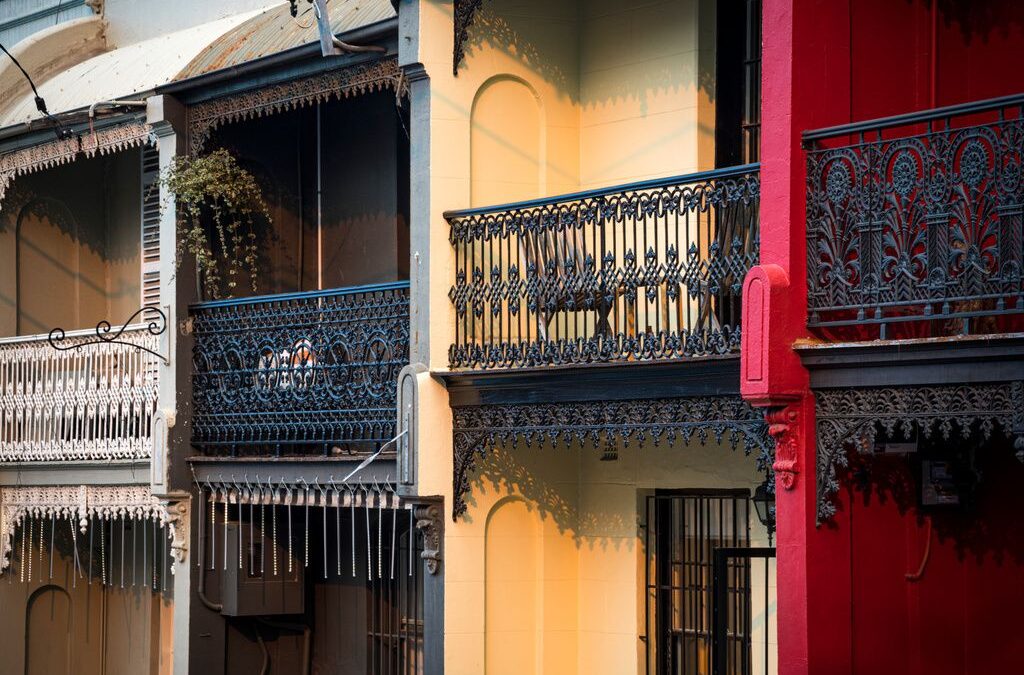
If you own a terrace in Paddington, Woollahra or any of the Eastern Suburbs streets that fall inside a Heritage Conservation Area, repainting isn’t quite the same as everywhere else. The rules aren’t designed to make life difficult, but they catch owners out regularly. Most often when they’ve already paid a painter and the council shows up asking questions.
Here’s a plain-English rundown of what’s actually required, what isn’t, and how to keep your repaint on the right side of council.
What a Heritage Conservation Area actually is
Heritage Conservation Areas (HCAs) are precincts identified under a council’s Local Environmental Plan as having collective heritage value. The whole streetscape is the asset, not just individual buildings. In our service area the relevant document is the Woollahra LEP 2014, with the supporting Development Control Plan (DCP) setting out specific controls for each precinct.
Suburbs in the Woollahra LGA that sit inside an HCA include:
- Most of Paddington (covered by Chapter C1 of the Woollahra DCP)
- Large parts of Woollahra (Chapter C2)
- Pockets of Bellevue Hill, Double Bay, Vaucluse and Rose Bay
A quick way to check your property’s status is the council’s online map or the NSW Planning Portal. If you’re not sure, ring Woollahra Council’s heritage advisor. It’s a free service.
When you do and don’t need approval to repaint
This is where most owners trip up. The short version:
You generally don’t need a DA if:
- You’re repainting a surface that’s already painted
- The colour scheme is sympathetic to the building’s period and the surrounding streetscape
- The works are minor maintenance with no adverse impact on heritage significance
You probably do need approval if:
- You’re painting a previously unpainted surface (this is the big one, see below)
- You’re making a significant departure from a sympathetic scheme
- The property is individually listed as a heritage item, not just a contributory building inside an HCA
- You’re altering decorative finishes, render or specialty surfaces
The classic mistake is painting over bare face brickwork or unpainted sandstone on a Victorian terrace. Once paint goes on, it’s nearly impossible to get off without damaging the masonry. Councils take that seriously and you can be issued with orders to remove the paint and reinstate the original surface. Expensive lesson.
BrushUp Painting Tip: If your terrace has bare brick, sandstone bases, render details or unpainted timber barge boards, get written advice from council before any paint touches them. We’ll always flag this during quoting on heritage jobs, but it’s worth knowing upfront.
Heritage items vs contributory buildings vs everything else
Properties inside an HCA fall into different categories, and the rules differ for each.
Heritage items are individually listed in Schedule 5 of the LEP. These have the strictest controls. Most significant works, including major paint changes, need a DA with a Heritage Impact Statement.
Contributory buildings make up the bulk of an HCA. In Paddington specifically, council’s view is that almost every building (except a small number of intrusive ones) contributes to the area’s heritage character. Repainting these in sympathetic colours is generally fine without a DA. Bigger changes still need consent.
Intrusive buildings are properties that don’t contribute or actively detract from HCA character. Fewer restrictions apply, but you’re still inside an HCA so the scheme shouldn’t clash with the broader streetscape.
If you don’t know which category your property falls into, council’s heritage advisor will tell you for free.
What “sympathetic colour scheme” actually means
Council won’t hand you a paint chart. There’s no single approved palette. What they’re looking for is colour selection appropriate to the building’s period and style, and respectful of what sits either side of it.
For Victorian terraces (roughly 1840 to 1900), the traditional approach uses three colours:
- Body in a mid-tone earthy shade. Common choices include muted greens, soft reds, burgundy, deep cream, stone or grey
- Trim in a paler complementary colour for windows, doors and architraves
- Highlight in a darker accent for ironwork, the front door, and small decorative details
Federation homes (roughly 1890 to 1915) lean toward warmer reds, terracottas, deeper greens and muted creams. Inter-War homes used softer palettes again.
What tends to look wrong: brilliant white, cool greys that read as modern, anything fluorescent, and the black-and-white scheme that’s been popular on new builds. They don’t sit well next to Victorian iron lace.
Most paint companies have dedicated heritage ranges (Dulux Heritage, Porter’s Paints, Haymes Heritage) and these are a sensible starting point. The Ian Evans book Colour Schemes for Old Australian Houses remains the standard reference, and Woollahra’s heritage advisor often refers people to it.
Where to find council’s actual guidance
For Woollahra LGA properties, the documents to look at are:
- Woollahra LEP 2014 for the legal framework and heritage schedule
- Chapter C1 of the DCP if you’re in Paddington
- Chapter C2 of the DCP if you’re in Woollahra
- Woollahra Council’s heritage page for plain-English summaries and exemption forms
If your property sits on the western edge of Paddington it may fall within the City of Sydney LGA instead. The rules are similar but the documents are different. City of Sydney has published its own repainting guidelines specifically for HCAs.
Practical advice for a heritage-area repaint
A few things we’ve learned doing this work across Paddington, Woollahra and the surrounding HCAs:
- Get a heritage exemption letter from council before starting. It takes a few weeks but it’s free and it protects you. Council will confirm in writing whether the works are exempt from needing a DA.
- Photograph the property before any paint is removed. Useful if questions come up later, useful for your own records.
- Talk to your neighbours. Heritage streetscapes are about the group, not the individual. A scheme that clashes with the rest of the row tends to attract complaints.
- Don’t strip paint aggressively from old surfaces. Lead paint is common on pre-1970s homes and removal needs to be done safely. A heritage-experienced painter will know how to handle it.
- Match traditional materials where you can. Limewash, traditional oil-based enamels and breathable masonry coatings behave differently to standard modern acrylics on old buildings.
If you’d like to see what a sympathetic heritage repaint actually looks like, our Paddington heritage painting before and after post walks through a recent project. For a sense of project costs and timing, see how much it costs to paint a house in Sydney.
When in doubt, ask
The council heritage advisor service is free and quick to access. A ten-minute phone call before you commit to colours and contractors saves more grief than any other single step. Our team handles heritage work regularly across Paddington, Woollahra, Bellevue Hill and Double Bay, and we’re happy to walk through the council process with you as part of the quoting stage. Get in touch through our residential painting page or learn more about us.
Frequently Asked Questions
Do I need a DA to repaint my Paddington terrace?
What happens if I paint without approval in a Heritage Conservation Area?
How long does a heritage exemption from council take?
Can I paint over bare brick if it's never been painted before?
Does the council have a list of approved heritage colours?
Ready to get your home painted by experienced professionals? Contact BrushUp Painting today on 0413 655 514 or email mosi@brushuppainting.com.au for a free, no-obligation quote. We’ll handle the preparation, the painting, and the clean-up — transforming your space with expert craftsmanship.